Shockwave Treatment For Scar Tissue
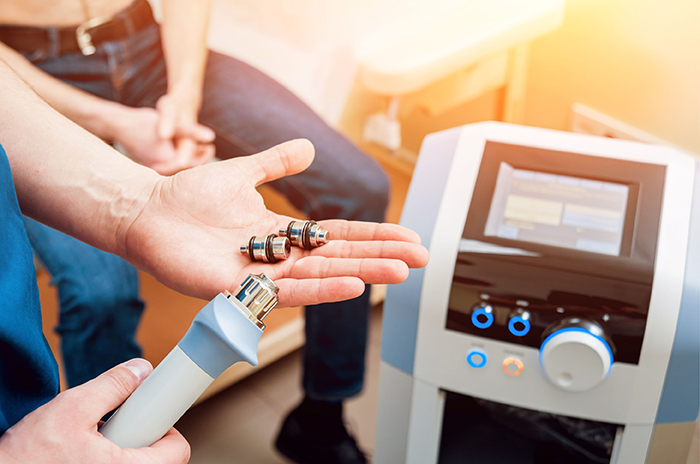
Shockwave Treatment For Scar Tissue
You may have scar tissue after a surgery.
Scar tissue can also form after injury. Scar tissue is formed as part of the normal healing process and happens whenever our body's tissue is damaged.
Scar tissue can be just as functional as its replacement tissue. Since it is a contracture of tissue it can decrease circulation, limit range of motion, and entrap nerves.
The Storz Focused Shockwave machine that we use has been developed after many years of research. Shockwave can penetrate below the skin surface, break up scar tissue and calcification on a cellular level. Since scar tissue is brittle and breaks up, this treatment stimulates new blood vessels and collagen fibers to form. This results in a tissue that is stronger, flexible, and more organized.
The number of Shockwave Therapy treatments required often varies depending on the severity and chronicity (how long you have had the condition).
Marin Spine and Sports is continually amazed at how quickly shockwave therapy can relieve chronic pain. Patients report feeling relief and decreased symptoms within a few days of their first shockwave therapy treatment.
Shockwave Therapy is so effective that many cases only require 4 to 5 treatments, only once a week, which minimizes your time at therapy, and won't interfere with your busy lifestyle. Some chronic conditions may require between 7 to 10 treatments once per week, and this usually depends on how long you have had your condition.
Generally, shockwave treatment for scar tissue will help after 3 to 4 sessions but may take up to 5-10 treatments to be most effective depending on the chronicity and the extent of damage.
The area will continue to heal after treatment is completed. Maximum recovery takes place approximately three months following the end of the sessions.
What Does The Shockwave Ultrasonic Treatment Feel Like?
The shockwave therapy machine can be used to stimulate the area. The Podiatrist will commence treatment with the machine set to the lowest amount of pressure and will gradually increase this pressure as the heel becomes de-sensitised. If the patient is experiencing discomfort, the Podiatrist can reduce the pressure or stop the treatment.
In a matter of minutes, the painful area will feel much better and can be tolerated easily. After the treatment is finished there is a feeling of relief and patients will usually walk around the treatment room pain-free. Plantar Fasciitis or Achilles Tendonitis pain relief lasts approximately five days. After that, the blood flow decreases. The foot is then ready for another treatment.